
Milk Production
Cow Inventory Shrinks Amid Rising Milk Production Costs
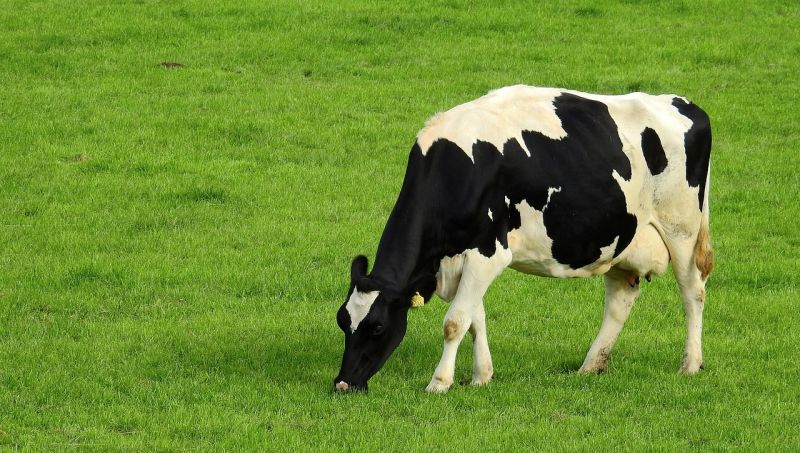
Without the modernization of the processing sector and an increase in purchase prices, small and medium-sized farms, which hold about 40% of the herd, risk disappearing from the market. Additional pressure on producers is being driven by the rising costs of fuel, fertilizers, and feed due to the blockade of the Strait of Hormuz, leading to a sharp increase in milk production costs.
According to preliminary data from the State Statistics Service, as of June 1, 2026, Ukraine's household and commercial sectors hold 1 million 786.9 thousand head of cattle, including 941.2 thousand cows. Compared to May 1, 2026, the cattle inventory in Ukraine grew by 2.1 thousand head (+0.1%), while the number of cows decreased by 3.3 thousand head (-0.3%). Compared to June 1, 2025, the cattle population contracted by 383 thousand head (-18%), including a reduction of 208 thousand cows (-18%). Approximately 53% of the livestock is kept on commercial enterprises, and 47% in household plots.
The commercial sector accounts for 951.2 thousand head of cattle, which is 5 thousand head more (+0.5%) compared to May 1, 2026. The cow inventory stands at 391.9 thousand head, down 400 cows (-0.1%) over the past month. Over the last year, the cattle population on commercial farms increased by 32.6 thousand head (+4%), and the number of cows grew by 9.6 thousand head (+3%).
The household sector holds 835.7 thousand head of cattle, which is 2 thousand head less (-0.3%) compared to May 1, 2026. As of June 1, 2026, the number of cows in household plots stood at 549.3 thousand head, down 3 thousand cows (-0.5%) from a month ago. Over the past year, the cattle population in households plummeted by 416 thousand head (-33%), while the number of cows dropped by 218 thousand head (-28%).
According to preliminary data from the State Statistics Service, growth in the commercial cow inventory was recorded at agricultural enterprises across 11 regions compared to June 1 of last year, namely: Rivne region (+29%), Lviv region (+22%), Kharkiv region (+13%), Ternopil region (+11%), Khmelnytskyi region (+9%), Zhytomyr region (+7%), Mykolaiv region (+6%), Chernihiv region (+5%), Kyiv region (+3%), Cherkasy region (+2%), and Vinnytsia region (+1%).
Since 2014, the cow inventory across both commercial and household sectors in Ukraine has shrunk nearly threefold. Agricultural enterprises have been forced to relocate cows to safer regions in Central and Western Ukraine. If dairy processing plants are not modernized for deeper milk processing by 2035 and do not begin purchasing milk at higher prices, small and medium-sized farms—which currently hold around 40% of the total herd—could vanish from the market. Under low purchase price conditions, they remain among the most vulnerable market participants and have already been operating under extremely harsh economic conditions for several months.
Due to the prolonged blockade of the Strait of Hormuz and the subsequent surge in global oil and fertilizer prices, Ukrainian farmers are facing a spike in production costs. Prices for fuel and lubricants have jumped by 30−50%, while nitrogen fertilizers have surged by 30−70%. Currently, Ukrainian farmers are using feed harvested with fertilizers from the previous season, but next year's planning will have to adapt to entirely different economic realities. According to estimates by the Food and Agriculture Organization (FAO), every 10% increase in the cost of fuel and lubricants adds at least 10% to the cost of grain. Concurrently, that same 10% increase in fuel prices can translate into up to a 30% surge in the cost of animal feed.
On a regional level, approximately 54% of the total cattle population is held across all farm categories in the following regions:
- Poltava region — 168.00 thousand head;
- Vinnytsia region — 160.00 thousand head;
- Khmelnytskyi region — 143.40 thousand head;
- Odesa region — 131.60 thousand head;
- Chernihiv region — 126.10 thousand head;
- Cherkasy region — 125.40 thousand head;
- Kyiv region — 105.70 thousand head.